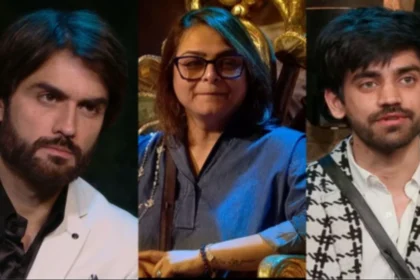
Rupali Ganguly, known for her powerful performances on-screen, has stepped beyond the realm of television. In 2024, she officially entered politics by joining the Bharatiya Janata Party. Since then, she’s used her public platform not just for entertainment, but to voice her opinions on pressing national matters. Recently, the Anupamaa actress took to X (formerly Twitter) to express her deep outrage over a controversial move by the Bangladeshi authorities.
The issue in question concerns the demolition of the ancestral home of legendary filmmaker Satyajit Ray. The house, located in Bangladesh, held immense historical and cultural value. According to reports, the Indian Government had requested the Bangladeshi administration to preserve the property. There was even a proposal to convert the site into a museum dedicated to Ray’s contributions to global cinema. Offers were also made to assist in its restoration and upkeep. But despite those appeals, the structure was torn down. The act has been met with strong backlash, particularly from India’s cultural and artistic communities.
Among the loudest voices condemning this move is Rupali Ganguly. Known for her sharp opinions, she didn’t hold back. Posting her views online, she wrote, “Disgusting and unforgivable! Under the so-called ‘moral leadership’ of Muhammad Yunus, Bangladesh has demolished the ancestral home of Bharat Ratna Satyajit Ray in Bangladesh. This wasn’t just a demolition! It was a message: They fear art. They erase legacy. They glorify violence, not culture. This act exposes their true colours.” Her statement sparked widespread discussion, resonating with many who saw the demolition as an erasure of heritage rather than a routine administrative decision.

Satyajit Ray’s influence on Indian and world cinema is unparalleled. A recipient of the Bharat Ratna, he remains one of the most celebrated auteurs to emerge from India. His storytelling, rooted in simplicity and emotion, left a profound impact on generations of filmmakers. That is why the loss of a place so closely tied to his roots feels personal to many.
The demolished structure was not just a house. It once belonged to Upendra Kishor Ray Chowdhury, Ray’s grandfather. A towering figure in Bengali literature, Upendra Kishor was not only a writer but a publisher and illustrator as well. The home was filled with memories that linked three generations of cultural brilliance. After the partition of India in 1947, the building came under the control of the Bangladeshi Government. In later years, it served as the Mymensingh Shishu Academy, functioning as a children’s institution since 1989.

The recent decision to bring it down has left a gaping hole in both memory and meaning. The proposal to create a museum could have given future generations a tangible connection to one of South Asia’s most important creative minds.
Disgusting and unforgivable!
Under the so-called "moral leadership" of Muhammad Yunus, Bangladesh has demolished the ancestral home of Bharat Ratna Satyajit Ray in Bangladesh.
This wasn’t just a demolition! it was a message: They fear art. They erase legacy. They glorify… pic.twitter.com/pNowQyx6zW
— Rupali Ganguly (@TheRupali) July 16, 2025Rupali’s voice joined that collective grief and anger. Her choice of words reflected more than just disappointment. It reflected a sense of betrayal and a plea to recognize the importance of preserving heritage. She has not been alone in this protest. Many in the Indian cultural fraternity have called the act insensitive, unnecessary, and politically motivated.