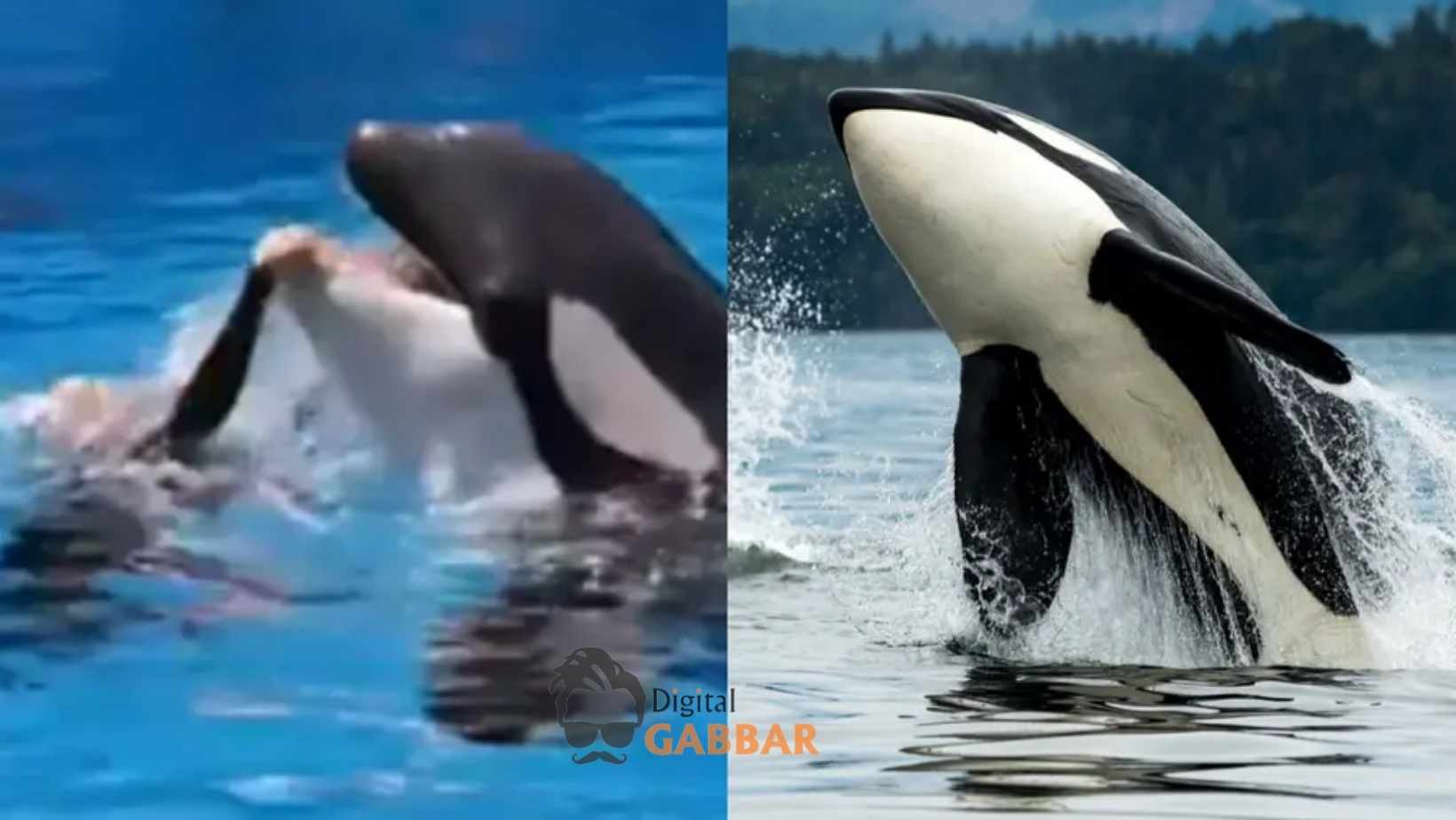
For days, social media users were gripped by a dramatic video allegedly showing marine trainer Jessica Radcliffe being fatally attacked by an orca during a live show at “Pacific Blue Marine Park.” The footage appeared horrifying and sparked debates on animal captivity — but investigators have now confirmed it was a complete fabrication.
Digital forensics revealed the entire incident, from the trainer’s name to the marine park itself, was invented using AI-generated visuals and voices. No such person as Jessica Radcliffe exists, and “Pacific Blue Marine Park” is not a registered facility.
The Viral Video That Never Happened
The video showed a young woman identified as “Jessica Radcliffe” performing atop a killer whale, only for the animal to suddenly lunge and pull her underwater. Online claims suggested she died moments later, but fact-checkers found zero credible sources, obituaries, or official statements confirming the event.

AI audio analysis revealed unnatural speech patterns, while frame-by-frame inspection exposed inconsistent water splashes and body movements — hallmarks of synthetic imagery.
Real-Life Orca Attacks Have Happened
While Radcliffe’s story is pure fiction, killer whales have been involved in fatal incidents in captivity. Notably, Tilikum, a captive orca, killed three people, including SeaWorld trainer Dawn Brancheau in 2010. Other cases include the 2009 death of Spanish trainer Alexis Martinez by an orca named Keto.

Why Do Such Hoaxes Spread?
Experts believe AI-generated tragedies spread because they tap into genuine fears and real-life parallels. By mixing fabricated content with historically documented attacks, hoaxers create believable but false narratives that rapidly go viral.
While Jessica Radcliffe may not have existed, the dangers of keeping powerful predators like orcas in captivity remain a serious and debated issue.